
Grace Filled Lemons

Turning Trials into Testimonies, One Lemon at a Time *A wholiopathic journey through chronic illness, herbal healing, and grace-filled living.*

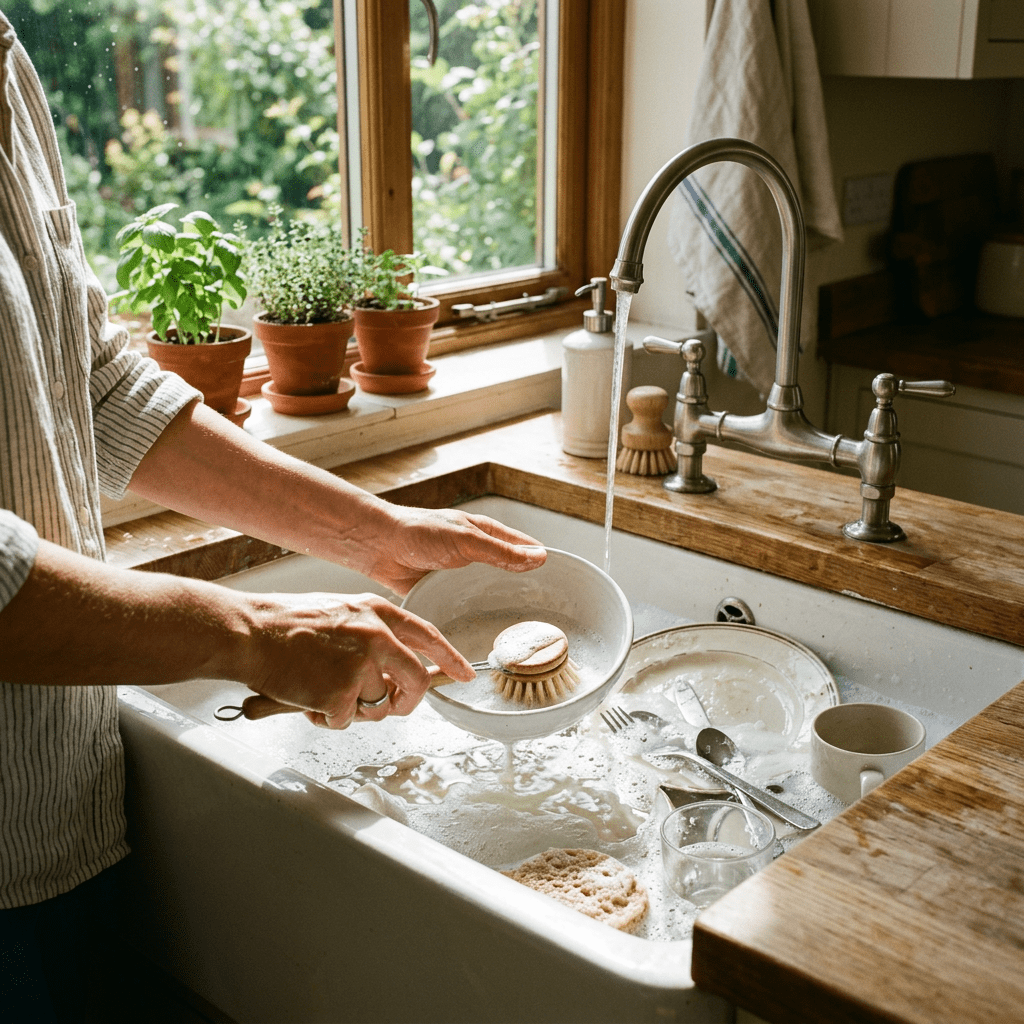
  • Clearing the Pantry as a Spiritual Discipline

    Lent is a season of clearing.

    Clearing noise.
    Clearing excess.
    Clearing what dulls our hunger for God.

    But we rarely think about the kitchen as a place of spiritual formation.

    And yet, it is one of the most formative rooms in our home.

    It is where we:

    • Nourish or numb
    • Gather or rush
    • Bless or complain
    • Indulge or restrain

    If Lent is about retraining desire, then the pantry is a good place to begin.


    God Often Clears Before He Fills

    Throughout Scripture, God removes before He restores.

    The desert comes before the Promised Land.
    The tomb comes before the Resurrection.
    The fast comes before the feast.

    Clearing is not deprivation.

    It is preparation.

    When we simplify the kitchen, we simplify decisions.
    When we simplify decisions, we reduce impulsivity.
    When we reduce impulsivity, we regain peace.


    Step One: The Pantry Audit

    Set aside one hour.

    Take everything out.

    Ask three simple questions:

    1. Is this nourishing?
    2. Is this crowding out better choices?
    3. Is this here from habit or intention?

    Discard expired items.
    Donate unopened excess.
    Remove ultra-processed snacks that quietly fuel mindless eating.

    This is not about moralizing food.

    It is about clarity.


    Step Two: Return to Lenten Staples

    Lenten cooking has historically been simple, hearty, and sustaining.

    Stock your pantry with:

    • Lentils
    • Dried or canned beans
    • Brown rice or quinoa
    • Whole grain pasta
    • Garlic and onions
    • Olive oil
    • Sea salt
    • Crushed tomatoes
    • Broth
    • Frozen vegetables for your freezer
    • Nuts and seeds
    • Herbal teas

    When the foundation is simple, meals become steady instead of reactive.


    Step Three: Create a “Pause Shelf”

    Designate one visible shelf or basket for intentional foods:

    • Herbal teas
    • Mineral broth
    • Nuts
    • Dark chocolate (small portions)
    • Fresh fruit

    When hunger hits, you are choosing from nourishment — not chaos.

    This small visual cue supports holy restraint without white-knuckling willpower.


    Mineral Broth for Lenten Simplicity

    This is grounding, inexpensive, and deeply nourishing.

    Simple Mineral Broth

    Ingredients:

    • 2 carrots, chopped
    • 2 celery stalks, chopped
    • 1 onion, quartered
    • 3 cloves garlic
    • 1 cup chopped leafy greens (kale, parsley, or spinach)
    • 1 tablespoon apple cider vinegar
    • 8 cups water
    • 1 teaspoon sea salt

    Instructions:

    1. Combine all ingredients in a large pot.
    2. Bring to a gentle boil, then reduce to simmer.
    3. Simmer 45–60 minutes.
    4. Strain and store in the refrigerator for up to 5 days.

    Sip warm in the afternoon when cravings often surface.

    This nourishes without excess.


    The Spiritual Work of the Kitchen

    A simplified kitchen builds:

    • Attentiveness
    • Gratitude
    • Measured eating
    • Reduced waste
    • Financial stewardship

    When we remove constant snacking and overcomplication, meals regain their dignity.

    You begin to notice:

    The sweetness of carrots.
    The warmth of broth.
    The satisfaction of lentils.

    Restraint sharpens appreciation.


    Blessing Your Kitchen This Lent

    After resetting, stand quietly in your kitchen.

    Place your hand on the counter and pray:

    Lord,

    Bless this space.
    Let what is prepared here nourish body and soul.
    Remove excess from my heart as I remove it from these shelves.
    Teach me gratitude for simple food.
    Make this kitchen a place of peace and generosity.

    Amen.

    From My Grace Filled Lemons Heart to Yours,

    Laura
  • Learning to Hold Grief Without Hardening

    Lent makes space for sorrow.

    Not dramatic sorrow.
    Not performative sorrow.

    But the quiet kind we carry in our chest.

    The Church gives us a companion in this:
    Seven Sorrows of Mary

    Mary did not avoid suffering.

    She walked through it-fully awake.

    And she did not harden.


    Sorrow One: The Prophecy of Simeon

    Simeon tells Mary a sword will pierce her soul.

    She receives joy and warning in the same breath.

    How often do we receive blessings that also carry future ache?

    Mary teaches us that love always risks sorrow.


    Sorrow Two: The Flight into Egypt

    Herod the Great seeks to kill her Son.

    In the night, she flees.

    Displacement.
    Fear.
    Uncertainty.

    There are seasons when obedience uproots us.

    Mary does not argue. She gathers and goes.


    Sorrow Three: Losing Jesus in the Temple

    For three days, she searches.

    Every parent knows the panic of not knowing where a child is.

    Even without children, we know the feeling of losing something precious- clarity, certainty, peace.

    Mary sought Him.

    She did not pretend calm.


    Sorrow Four: Meeting Jesus on the Way to Calvary

    She sees Him beaten and burdened.

    There are moments when we cannot fix what someone we love is carrying.

    We can only stand near.

    Mary’s presence is wordless fidelity.


    Sorrow Five: Standing at the Cross

    Jesus Christ dies.

    She does not collapse.

    She remains.

    Grief does not make her flee.

    She stays rooted in love.


    Sorrow Six: Receiving His Body

    The Pietà moment.

    She holds what she once held as an infant.

    Love remembers.


    Sorrow Seven: Placing Him in the Tomb

    Silence.

    No resolution yet.

    Just waiting.

    Mary understands the space between promise and fulfillment.


    What Sorrow Does to the Body

    Grief is not abstract.

    It lodges in the body:

    • Tight chest
    • Shallow breath
    • Fatigue
    • Neck and shoulder tension
    • Digestive discomfort

    Unprocessed sorrow often becomes hardness.

    Mary shows us another way.

    She feels fully – and remains soft.


    A Wholiopathic Ritual for Softening Grief

    This is not dramatic.

    It is gentle.

    Warm Chest Compress

    • Steep chamomile tea strongly.
    • Soak a cloth in the warm tea.
    • Place over the heart for 10–15 minutes.
    • Breathe slowly.

    Let warmth soften what tension has guarded.


    Rose & Frankincense Anointing Oil

    Ingredients:

    • 2 tablespoons jojoba oil
    • 3 drops rose essential oil
    • 2 drops frankincense essential oil

    Apply lightly over the sternum while praying:

    “Mother, teach me how to hold sorrow without closing.”

    Rose comforts the heart.
    Frankincense steadies the spirit.


    Journaling Prompts

    • What sorrow have I minimized instead of acknowledged?
    • Where have I grown hard to protect myself?
    • What would it look like to remain present without fixing?
    • What promise am I still waiting to see fulfilled?

    Mary’s Strength

    Mary is not fragile.

    She is steady.

    Her sorrow does not make her brittle.

    It deepens her compassion.

    She becomes mother not only to Christ, but to all who suffer.

    At the Cross, Jesus gives her to us.

    Even if your relationship with your own mother is complicated or wounded, Mary’s motherhood is steady, not conditional.

    She does not withdraw when you struggle.

    She stands.


    Closing Prayer

    Mother of Sorrows,

    Teach me to stay.
    Teach me to feel without fear.
    Teach me to soften instead of harden.

    When sorrow presses against my chest,
    Remind me that love is still here.

    And when I must wait in silence,
    Help me trust that resurrection is coming.

    Amen.

    From My Grace Filled Lemons Heart to Yours,

    Laura
  • Bringing Benedictine Rhythm into Your Home This Lent

    Lent does not require you to leave your life.

    It does not ask you to escape your kitchen, your work, your children, your responsibilities.

    It asks you to order them.

    In a chaotic world, holiness often looks like rhythm.

    And few saints understood rhythm better than Saint Benedict of Nursia.


    Stability in an Age of Restlessness

    St. Benedict lived in the 5th and 6th centuries during the collapse of the Roman Empire. Society was unstable. Political systems were crumbling. Violence and uncertainty were common.

    Instead of trying to control the chaos, Benedict built communities anchored in prayer, work, and stability.

    His Rule became the foundation of Western monastic life.

    Its heartbeat was simple:

    Ora et Labora.
    Pray and Work.

    Not hustle and collapse.
    Not perform and escape.
    Not consume and numb.

    Pray. Work. Repeat.

    That rhythm rebuilt civilization.

    And it can steady a household, too.


    Your Home as a Domestic Monastery

    You do not need stone cloisters to live ordered holiness.

    You need intention.

    Imagine your home as a place of:

    • Regular prayer
    • Honest labor
    • Measured rest
    • Gentle discipline
    • Quiet hospitality

    A domestic monastery is not rigid.

    It is stable.


    Three Anchors for a Benedictine Lent

    Rather than overhauling your life, choose three daily anchors.

    1. Morning Offering (Ora)

    Before checking your phone, whisper:

    “Lord, I give You this day.”

    Light a candle if you can.
    Pray one Psalm slowly.
    Even 60 seconds sets the tone.

    Monks begin with prayer because it orders everything else.


    2. Faithful Work (Labora)

    Approach daily tasks — dishes, emails, teaching, caregiving — as sacred participation.

    Benedict believed work was not separate from holiness.

    Fold laundry attentively.
    Cook slowly.
    Answer emails with charity.

    This transforms ordinary labor into worship.


    3. Evening Examen

    Before bed, reflect:

    • Where did I notice God today?
    • Where did I resist Him?
    • What am I grateful for?

    No self-condemnation. Just awareness.

    Stability grows through daily reflection.


    The Grace of Routine

    We often resist routine because we crave novelty.

    But constant reinvention exhausts the soul.

    Benedictine stability says:

    Stay.
    Be faithful here.
    Let repetition form you.

    Even those with unpredictable schedules, demanding seasons, or health limitations can anchor the day in small rhythms.

    Stability is not perfection.

    It is returning.


    A Benedictine Kitchen Practice

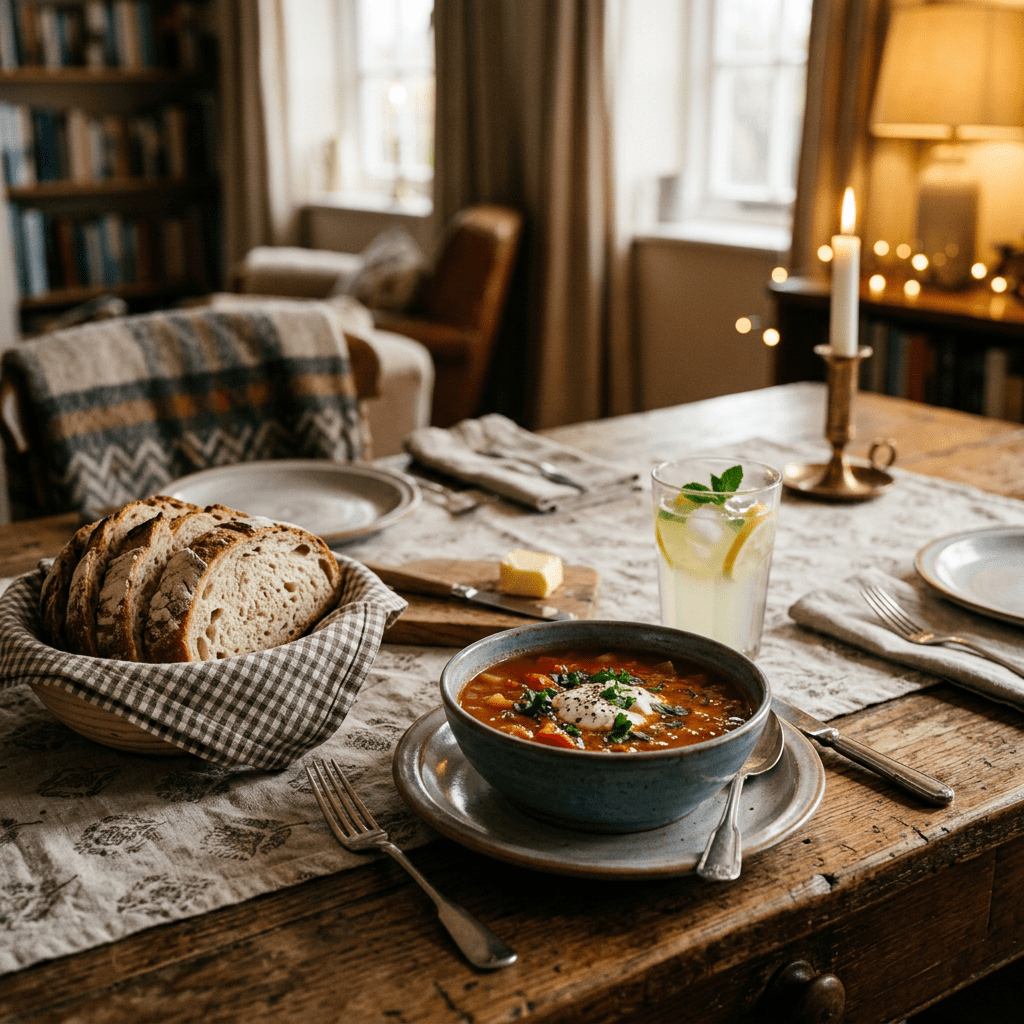
    Monasteries have always cultivated herbs, bread, and simple nourishment.

    Food was never rushed. It was blessed, shared, and eaten with gratitude.

    Here is a simple rosemary bread inspired by monastic kitchens.


    Rosemary Olive Oil Bread

    Ingredients:

    • 3 cups all-purpose flour
    • 1 teaspoon sea salt
    • 1 tablespoon fresh rosemary, finely chopped
    • 2 ¼ teaspoons active dry yeast
    • 1 cup warm water
    • 2 tablespoons olive oil

    Instructions:

    1. In a bowl, combine warm water and yeast. Let sit 5 minutes until foamy.
    2. Stir in olive oil, flour, salt, and rosemary.
    3. Knead 8–10 minutes until smooth.
    4. Cover and let rise 1 hour.
    5. Shape into a round loaf and place on parchment.
    6. Bake at 375°F for 25–30 minutes until golden.

    Serve with olive oil and a simple blessing.

    Let bread-making become prayer.


    Benedictine Honey Tonic

    A gentle seasonal immune support inspired by traditional monastic herb use:

    • 1 cup raw honey
    • 1 tablespoon dried thyme
    • 1 tablespoon dried elderflower
    • Zest of one lemon

    Warm gently (do not boil), steep 20 minutes, strain, and store in a jar.

    Take 1 teaspoon daily.

    Sweetness with purpose.


    What the Domestic Monastery Builds

    When your home adopts even a whisper of Benedictine rhythm, it forms:

    • Stability in uncertainty
    • Peace in repetition
    • Reverence in routine
    • Gratitude in labor

    You do not need dramatic change.

    You need gentle anchors.

    In a restless culture, a stable home becomes countercultural witness.


    Closing Prayer

    Lord,

    Order my days.
    Bless my work.
    Sanctify my kitchen.
    Make my home a place of prayer and steady love.

    Teach me to stay,
    To build,
    To return.

    Amen.

    From My Grace Filled Lemons Heart to Yours,

    Laura

  • What We Gain When We Don’t Indulge Every Desire

    Lent is often described by what we give up.

    Sugar.
    Coffee.
    Social media.
    Snacking between meals.

    But Lent is not primarily about subtraction.

    It is about formation.

    It is about learning how to want rightly.


    Desire Is Not the Enemy

    God created desire.

    Hunger draws us to food.
    Loneliness draws us to relationship.
    Longing draws us to beauty.

    Desire itself is not sinful.

    But desire can become disordered when it demands immediate satisfaction, when it overrides wisdom, or when it becomes our master rather than our servant.

    Saint Augustine of Hippo wrote, “Our hearts are restless until they rest in You.”

    The problem is not that we desire.

    The problem is that we often desire the wrong things, in the wrong amounts, at the wrong time — and expect them to satisfy what only God can fill.

    Lent gently retrains the heart.


    The Culture of Immediate Gratification

    We live in a world that rarely says “wait.”

    Hungry? Order now.
    Lonely? Scroll.
    Bored? Stream something.
    Uncomfortable? Numb it.

    We are not taught how to sit with longing.

    But Scripture repeatedly invites restraint.

    Restraint is not repression.

    It is strength.

    When we practice holy restraint, we are saying:

    “I am not ruled by every impulse.”

    That is freedom.


    What Restraint Builds in Us

    When we do not indulge every craving, something surprising happens.

    We grow:

    • Patience
    • Endurance
    • Clarity
    • Discernment
    • Gratitude

    When we wait to eat, we taste more fully.

    When we pause before responding in frustration, we speak more wisely.

    When we delay a purchase, we often realize we did not need it.

    Restraint sharpens awareness.

    It teaches us the difference between need and impulse.


    A Lenten Practice: The Discipline of the Pause

    Instead of adding more complexity to Lent, try this:

    Before indulging a desire — pause.

    Not forever. Just long enough to ask:

    • Is this nourishing or numbing?
    • Am I responding from peace or discomfort?
    • What am I actually needing right now?

    This can apply to:

    • Food
    • Speech
    • Spending
    • Emotional reactions
    • Even good things taken in excess

    The pause is where formation happens.


    A Wholiopathic Companion Practice

    Because body and soul are intertwined, we can support restraint physically as well as spiritually.

    Bitter Greens Reset Salad

    Bitters help regulate digestion and reduce sugar cravings. They gently “wake up” the palate.

    Ingredients:

    • 2 cups arugula or dandelion greens
    • ½ cup thinly sliced fennel
    • ¼ cup toasted walnuts
    • 1 tablespoon olive oil
    • 1 tablespoon fresh lemon juice
    • Pinch sea salt

    Toss and serve before your main meal.

    The slight bitterness reminds us that not everything sweet is nourishing — and not everything bitter is harmful.


    Simple Digestive Bitters Tonic

    If you prefer an herbal support:

    • 1 teaspoon dried dandelion root
    • 1 teaspoon dried orange peel
    • 1 cup hot water

    Steep 10–15 minutes. Drink 15 minutes before meals.

    This supports digestion and reduces impulsive snacking.


    Restraint Is Not Harshness

    Holy restraint is not about punishing yourself.

    It is not about white-knuckling hunger.

    It is about learning that you can feel a desire without obeying it immediately.

    You can experience discomfort without escaping it.

    You can long without grasping.

    This is deeply countercultural.

    And deeply freeing.


    What We Gain

    When we stop indulging every impulse, we gain:

    • Space
    • Awareness
    • Self-mastery
    • Deeper gratitude
    • Clearer love

    Lent is not about shrinking your life.

    It is about strengthening your love.

    Restraint is not the loss of pleasure.

    It is the purification of it.


    Closing Prayer

    Lord,

    Teach me to pause before I grasp.
    Teach me to hunger for what truly satisfies.
    Train my desires so they rest in You.
    Make my restraint gentle, not rigid.
    And let my small sacrifices deepen my freedom.

    Amen.

    From My Grace Filled Lemons Heart to Yours,

    Laura
  • A Month of Martyrs, Mercy, and Hidden Fidelity

    March is not a quiet month in the Church.

    It is a procession of courage.

    From martyrs in the arena…
    To mystics in their homes…
    To reformers, founders, and hidden guardians…

    March teaches us that holiness takes many forms — bold, wounded, silent, sacrificial.

    Let us walk through them in order.


    March 3

    St. Katharine Drexel (1858–1955)

    https://gardnerlibrary.org/sites/default/files/entry/17a72.jpg
    https://upload.wikimedia.org/wikipedia/commons/thumb/0/0a/Saint_Cyprian_Church_%28Columbus%2C_Ohio%29_Sister_of_the_Blessed_Sacrament_and_Schoolboy.jpg/250px-Saint_Cyprian_Church_%28Columbus%2C_Ohio%29_Sister_of_the_Blessed_Sacrament_and_Schoolboy.jpg

    Saint Katharine Drexel

    Born into Philadelphia wealth, Katharine inherited millions — and gave nearly all of it away.

    She founded the Sisters of the Blessed Sacrament and established schools for Native American and African American communities at a time when such work was unpopular and even dangerous.

    Her sanctity was not sentimental. It was strategic, sacrificial, and steady.


    March 7

    Saints Perpetua and Felicitas (d. 203)

    https://www.axiawomen.org/sites/default/files/2020-06/Sts%20Perpetua%20and%20Felicity.jpg

    Saints Perpetua and Felicity

    Young mothers.

    Catechumens.

    Imprisoned in Carthage during Roman persecution.

    Perpetua was noble-born. Felicitas was enslaved. Their friendship in prison defied social order.

    Perpetua kept a prison diary — one of the earliest surviving Christian writings by a woman.

    They were condemned to die in the arena.

    Felicitas gave birth just days before martyrdom.

    Their courage was maternal, defiant, luminous.

    They remind us that holiness does not wait for convenience.


    March 8

    St. John of God (1495–1550)

    https://upload.wikimedia.org/wikipedia/commons/thumb/5/58/John_of_god_murillo.jpg/930px-John_of_god_murillo.jpg
    https://s3.us-west-2.amazonaws.com/files.catholicworldreport.com/2025/03/StJohnofGod_hd_db-678x381.jpg

    Saint John of God

    A soldier. A wanderer. A bookseller.

    After a dramatic conversion, John devoted his life to caring for the sick and mentally ill — people often abandoned and mistreated in his time.

    He founded what became the Brothers Hospitallers.

    He personally carried the sick through the streets to shelter.

    His holiness was gritty and practical.

    He is now the patron of hospitals and the sick.


    March 9

    St. Frances of Rome (1384–1440)

    https://www.monasteryicons.com/images/large/st-frances-cabrini-icon-412.jpg

    Saint Frances of Rome

    Wife. Mother. Mystic.

    Frances lived in Rome during political unrest and plague.

    Though married young, she cultivated deep contemplative prayer while managing a household.

    After her husband’s death, she founded a community of oblates.

    She reportedly saw her guardian angel.

    Frances reminds us that sanctity is possible in domestic life — in kitchens, sickrooms, and city streets.


    March 10

    The Forty Martyrs of Sebaste (d. 320)

    https://upload.wikimedia.org/wikipedia/commons/3/3b/FortyMartyrsofSebaste.JPG

    Forty Martyrs of Sebaste

    Forty Roman soldiers who refused to renounce Christ.

    They were sentenced to stand naked on a frozen lake overnight.

    One renounced the faith and left.

    A guard, moved by their courage, declared himself Christian and took his place — restoring the number to forty.

    Their story is about perseverance together.

    We are not meant to endure alone.


    March 12

    St. Gregory the Great (c. 540–604)

    https://s3.amazonaws.com/cdn.monasteryicons.com/images/popup/st-gregory-the-great-icon-706.jpg
    https://upload.wikimedia.org/wikipedia/commons/1/15/Graduale_Aboense_2.jpg

    Pope Gregory I

    A monk who became pope.

    He strengthened liturgical structure, missionary expansion, and Church governance.

    Gregorian chant bears his name.

    He wrote extensively on pastoral care.

    Gregory shows us that intellectual leadership can be holy service.


    March 17

    St. Patrick (c. 385–461)

    https://images.openai.com/static-rsc-3/AZv_DjtPi2HuxzQ6COjW1LJ9q8rz2BmOldN3V2SZmyCzvEIKazZGMUtZRE1MMbfAnywfW0uY2FyTTlyM9f6Gc9LCrSJSGdLp6NI-jykO8vk?purpose=fullsize&v=1
    https://images.openai.com/static-rsc-3/yj717bPy_yIXK6lFAhQT9T1ArkTluFShDIRhR8p9A8n3R7SmaNezNWsWnEO9SK8UtpeMcb6lZoxdiGjOLkMsTRYkKePxCmuaGZa9ExsSzA8?purpose=fullsize&v=1

    Saint Patrick

    Kidnapped. Enslaved. Escaped.

    Returned as missionary bishop to Ireland.

    Converted thousands.

    Forgave deeply.

    Patrick’s feast is not about green decorations.

    It is about resurrection after captivity.


    March 19

    St. Joseph

    https://www.monasteryicons.com/images/large/st-joseph-holy-cards-727HC100.jpg

    Saint Joseph

    Carpenter. Protector. Dream-listener.

    He models quiet obedience and fatherly courage.

    Look for a more in depth post about our beloved St Joseph on the 19th.


    March 21

    St. Benedict (480–547)

    https://images.openai.com/static-rsc-3/NzhfQxE7Hj0itbzH4qE0AiuIIDbkDq4cA0rCPpfwXLsDI_HqypAl0Zuu6f0T-Rxi-a7eb8ftR8o-SZ8P7nAbbQuIhr6r8QgJmk0O7cpK9ns?purpose=fullsize&v=1
    https://upload.wikimedia.org/wikipedia/commons/d/df/Statue_of_St._Benedict%2C_Monastery_of_Rawaseneng.jpg
    https://upload.wikimedia.org/wikipedia/commons/c/c9/MS._Hatton_48_fol._6v-7r.jpg

    Saint Benedict of Nursia

    Founder of Western monasticism.

    Author of the Rule of St. Benedict.

    His motto: Ora et Labora — Pray and Work.

    He built stability in chaotic times.


    March 24

    St. Gabriel the Archangel

    https://images.openai.com/static-rsc-3/s6p4nSUCNhefljKp81K2Mt7SKWVwjaoM7DCua7nhP_xXCsOgixsr3Y4OUz7qH45-a8cuFQB5umwxYWjOom_ZFCBbed88hFzN8WU93u3KJo0?purpose=fullsize&v=1
    https://www.eutouring.com/statues_in_paris_b16_DSC01755_lrg.jpg

    Gabriel

    Messenger of the Annunciation.

    Gabriel appears in Daniel and Luke.

    He carries news that changes history.

    His feast reminds us that God still speaks.


    March 25 & March 27

    The Annunciation & The Seven Sorrows of Mary

    https://images.openai.com/static-rsc-3/MvxJtDf0WBRkm46CBP9TKj7Uu35D6_OJSX3W6ZjT1a3v8kujLbfUuvJBIykx1zBqo7O3DDckC_j1EOBInEHsGw1XQl434qx_lpYkByBtIUI?purpose=fullsize&v=1
    https://images.openai.com/static-rsc-3/gqPwRaXut9OAFGDr5lgCE-CegYco65dFuxqCPCY28M8WPT643MEZJCqaD2Pth_ShT-BJL5vxL8vRvdbhr_n1J0KkGxiQeYYRB5upy0Cez5A?purpose=fullsize&v=1
    https://images.openai.com/static-rsc-3/s6p4nSUCNhefljKp81K2Mt7SKWVwjaoM7DCua7nhP_xXCsOgixsr3Y4OUz7qH45-a8cuFQB5umwxYWjOom_ZFCBbed88hFzN8WU93u3KJo0?purpose=fullsize&v=1

    Annunciation
    Seven Sorrows of Mary

    Mary’s fiat begins salvation history.

    Yet her yes carried sorrow:

    • Simeon’s prophecy
    • Flight into Egypt
    • Losing Jesus in the Temple
    • Meeting Him on the way to Calvary
    • Standing at the Cross
    • Receiving His body
    • Laying Him in the tomb

    March holds both annunciation and foreknowledge of suffering.


    March Is a School of Courage

    Martyrs.
    Mothers.
    Mystics.
    Missionaries.
    Monks.

    March does not offer one model of holiness.

    It offers many.

    And perhaps that is the grace of this month.

    There is room for your particular path.

    From My Grace Filled Lemons Heart to Yours,

    Laura

  • When most of us think of Lent, we think of giving something up.

    Sugar.
    Coffee.
    Meat on Fridays.
    Social media.

    But beneath the external fast is something quieter, and far more transformative.

    Lent is not merely about subtraction.
    It is about interior reordering.

    It is about learning how to be still without reaching for noise.


    The Desert Was Not Dramatic

    Before His public ministry, Christ entered the wilderness.

    Jesus Christ did not begin with miracles.
    He began with silence.

    The desert strips away distraction.
    It reveals what we cling to for comfort.
    It exposes our interior restlessness.

    Many of us discover during Lent that we are less uncomfortable without sugar than we are without distraction.

    Silence reveals hunger we did not know we had.


    The Fast from Constant Explanation

    One hidden Lenten discipline is fasting from self-justification.

    We live in an age that encourages constant explanation:

    • Clarify yourself.
    • Defend yourself.
    • Curate your image.
    • Respond immediately.

    But when Christ stood before Pilate, He did not scramble to prove Himself.

    Pontius Pilate questioned Him. Accused Him. Pressured Him.

    Christ stood in truth.

    Interior strength is not loud.

    Lent invites us to loosen our grip on the need to:

    • Win every argument
    • Correct every misunderstanding
    • Defend every choice

    Sometimes holiness looks like quiet trust.


    Silence Is Not Emptiness

    Silence is not absence.

    It is space.

    And most of us resist space.

    Space reveals:

    • Anxiety we medicate with noise
    • Loneliness we drown with scrolling
    • Fear we bury under productivity

    This is true whether you are a busy parent, a professional, retired, single, chronically ill, or fully energetic. Interior noise is universal.

    Lent levels us all.


    A Gentle Lenten Practice for Any State of Life

    Instead of focusing only on what to eliminate, consider adding a practice of interior quiet.

    1. The Five-Minute Desert

    Once a day:

    • Sit without music.
    • No phone in reach.
    • No multitasking.

    Just breathe.

    2. A Candle Prayer

    Light a beeswax candle in the evening.
    Pray one Psalm slowly.
    Sit in stillness afterward.

    3. The Explanation Fast

    For one week, practice:

    • Not over-explaining.
    • Not filling every silence.
    • Not defending every small preference.

    Let your “yes” be yes.


    Herbal Companion for Interior Quiet

    A simple calming tea:

    • 1 teaspoon chamomile
    • 1 teaspoon lemon balm
    • ½ teaspoon holy basil

    Steep in hot water for 10 minutes.

    This blend supports nervous system regulation and mental clarity without sedation.

    Even those in strong health can benefit from intentional slowing.


    Closing Reflection

    Lent is not about becoming smaller.

    It is about becoming clearer.

    Clear of noise.
    Clear of scrambling.
    Clear of false urgency.

    The hidden fast may be the one that bears the deepest fruit.

    And no one but God needs to see it.

    From My Grace Filled Lemons Heart to Yours,

    Laura

  • A Saint-Inspired Lenten Menu Plan for Simple, Hidden Holiness

    March always feels like a threshold month.

    The earth is still brown and quiet. The air still carries winter. And yet- something underneath is stirring.

    This is the month of hidden roots.

    It is the month of St. Joseph, the silent protector.
    The month of watchful Lent.
    The month of small faithfulness.

    So this March, we are not cooking extravagantly.
    We are cooking simply. Intentionally. Prayerfully.

    We are building meals the way Joseph built his workshop — steady, humble, strong.


    Week 1: Hidden Strength

    Inspired by St. Joseph (March 19)

    https://images.openai.com/static-rsc-3/lQy-bOn-7dh2IXp4Na7FUGRXuNKhS76-OWVauvbwOtQdU8iTGC00_hjFOn4BFZqDUS_QbI31f7n0MJ0_li6RVBGeNYELwXGKrcWDt6QTS-w?purpose=fullsize&v=1

    Theme: Steadfast nourishment
    Focus: Protein, grounding foods, mineral support

    Weekly Menu

    Breakfasts

    • Skyr yogurt with berries and homemade granola
    • Soft boiled eggs and whole grain toast

    Lunches

    • Rustic Lentil & Carrot Soup
    • Arugula salad with olive oil and lemon

    Dinners

    • Herb roasted chicken thighs
    • Quinoa with parsley and garlic
    • Steamed green beans

    🍲 Rustic Lentil & Carrot Soup

    Ingredients:

    • 1 tablespoon olive oil
    • 1 yellow onion, diced
    • 2 carrots, chopped
    • 3 cloves garlic, minced
    • 1 cup dry green lentils
    • 6 cups chicken or vegetable broth
    • 1 teaspoon dried thyme
    • 1 bay leaf
    • 1 teaspoon sea salt
    • ½ teaspoon black pepper

    Instructions:

    1. Heat olive oil in a large pot over medium heat.
    2. Sauté onion and carrots for 5 minutes.
    3. Add garlic and cook 1 minute more.
    4. Stir in lentils, broth, thyme, bay leaf, salt, and pepper.
    5. Simmer 30–35 minutes until lentils are tender.
    6. Remove bay leaf before serving.

    Serve with warm whole grain bread and a simple prayer:
    “St. Joseph, teach us to serve quietly.”


    Week 2: Simplicity & Surrender

    Inspired by St. Frances of Rome (March 9)

    https://images.openai.com/static-rsc-3/LqUY8rjyww8eC3_fSfLWlhRaCNAtg8VHVl2EDkboON_7GYvLf2OdKMVYet-l8QXgzjeC3MAYZEO44Sxw4n9EGkemsCM2EmWDwtopz_d6wlQ?purpose=fullsize&v=1
    https://images.openai.com/static-rsc-3/szbfccNUGTEzQ87K5e3FxbySvOb8bFDz9QuC1PBP_m3DCWF9SBJPZLERuyW7R6SaVgUAbkGI_dSCVP-lS-k-SL7JFg5KfgFDPc1ci3xOFd0?purpose=fullsize&v=1
    https://images.openai.com/static-rsc-3/-rYuDd3E6h8CdtTlBGBFG2LV5UGpTsL7wWpVOwhA8oFIFPM1Ot1evbZOTlhDfuxkw1rv9a2Pr2oG58_nxuBc1mn4Lx0og87uJJqKpvtMWhk?purpose=fullsize&v=1

    Theme: Light but sustaining
    Focus: Easy digestion, Lenten simplicity

    Weekly Menu

    Breakfasts

    • Warm cinnamon oatmeal with walnuts
    • Herbal tea (nettle + oatstraw for mineral support)

    Lunches

    • Leftover baked fish over greens
    • Lentil soup repeats for simplicity

    Dinners

    • Lemon herb baked white fish
    • Couscous with parsley
    • Roasted carrots and parsnips

    🐟 Lemon Herb Baked Fish

    Ingredients:

    • 4 white fish fillets (cod or haddock)
    • 2 tablespoons olive oil
    • Juice of 1 lemon
    • 1 teaspoon dried oregano
    • ½ teaspoon sea salt
    • ¼ teaspoon black pepper

    Instructions:

    1. Preheat oven to 375°F.
    2. Place fish in baking dish.
    3. Drizzle with olive oil and lemon juice.
    4. Sprinkle with oregano, salt, and pepper.
    5. Bake 15–18 minutes until flaky.

    This is a perfect Friday meal during Lent.


    Week 3: Quiet Joy

    Inspired by the Annunciation (March 25)

    https://www.allrecipes.com/thmb/9859OLATqJRvrlSg6qAGuU-2NHQ%3D/1500x0/filters%3Ano_upscale%28%29%3Amax_bytes%28150000%29%3Astrip_icc%28%29/23265-Tomato-Basil-Pasta-DDMFS-4x3-7728a390ea3b4e2db7a4e7347cd96e78.jpg
    https://images.openai.com/static-rsc-3/wc7tM9iq1zZZFbGjv-y4J9XubMTHMryTuo1VD2ZP3oYVtV-RBsauZ4o28jkuOTsFI9ogToWUCVKjG2OAj8LlKYqZKf0Fu-Fi8Ybifbbvm1g?purpose=fullsize&v=1
    https://images.openai.com/static-rsc-3/YlNidBEogVEssGaNSCCxDKBQ6RnpphjgDiYd_CFnjkhAUflJCxkuw4lYj1tYGlyAS3NZR2kSm_lKR2QSgkFGqDrSDL2vcGG14bKwWFr-_e0?purpose=fullsize&v=1

    Theme: Fiat.
    Focus: Fresh herbs, gentle brightness

    Weekly Menu

    Breakfasts

    • Yogurt, berries, granola (your favorite steady rhythm)

    Lunches

    • Tomato basil soup
    • Simple toast with avocado and sea salt

    Dinners

    • Tomato basil pasta
    • Caprese salad
    • Focaccia bread

    🍅 Simple Tomato Basil Pasta

    Ingredients:

    • 12 ounces pasta
    • 2 tablespoons olive oil
    • 3 cloves garlic, minced
    • 1 can (28 oz) crushed tomatoes
    • ½ teaspoon sea salt
    • ¼ teaspoon black pepper
    • ½ cup fresh basil, chopped

    Instructions:

    1. Cook pasta according to package instructions.
    2. In skillet, heat olive oil and sauté garlic 1 minute.
    3. Add crushed tomatoes, salt, and pepper. Simmer 10 minutes.
    4. Stir in fresh basil.
    5. Toss with drained pasta.

    Serve and pray quietly:
    “Be it done unto me according to Your word.”


    Herbal Support for March Fatigue

    Late winter can be exhausting, especially for those of us navigating chronic illness.

    Consider:

    Mineral Tea Blend

    • 1 tablespoon dried nettle
    • 1 tablespoon oatstraw
    • 1 teaspoon peppermint

    Steep in 4 cups hot water for 20 minutes. Drink throughout the day.

    This supports adrenal fatigue, gentle detox, and nervous system nourishment.


    Closing Reflection

    March holiness is not loud.

    It is not dramatic.

    It is chopping onions.
    It is reheating soup.
    It is showing up again.
    It is faithfulness in the ordinary.

    Like Joseph.

    Like Mary.

    Like you.

    From My Grace Filled Lemons Heart to Yours,

    Laura
  • Living Faithfully Inside an Invisible Illness

    There is a particular kind of loneliness that comes with invisible illness.

    It is the loneliness of parking in a handicapped space and feeling eyes on you.

    The loneliness of unfolding a wheelchair on a day you “look fine.”

    The loneliness of using a mobility aid and wondering if someone thinks you are exaggerating.

    The loneliness of knowing your body cannot do what your face seems capable of doing.

    You stand up. You smile. You speak clearly.

    And people assume strength.

    But they do not see the tremor in your nervous system.

    They do not see the cardiac irregularities.

    They do not see the connective tissue instability.

    They do not see the mast cells misfiring.

    They do not see the autoimmune storm.

    They only see a woman who “should be able.”

    And that gap — between appearance and reality — can become a battlefield in the mind.


    The Complexity of Multiple Invisible Illnesses

    Living with multiple chronic conditions is not linear.

    It is not just fatigue.

    It is not just pain.

    It is not just dizziness.

    It is the layering of symptoms that interact in unpredictable ways.

    One day:

    • Your heart rate spikes for no clear reason.
    • Your joints sublux from ordinary movement.
    • Your nervous system feels electric and inflamed.
    • Your energy disappears by 10 a.m.

    And yet — outwardly — you look composed.

    Invisible illness creates a strange paradox:

    You are both strong and limited.

    Capable and disabled.

    Grateful and grieving.

    You are partially handicapped in a culture that defines disability by visibility.

    And that tension can invite an insidious whisper:

    “Maybe you are overreacting.”

    “Maybe you should push harder.”

    “Maybe you’re just weak.”

    “Maybe you don’t really need that placard.”

    “Maybe you’re dramatic.”

    This is where spiritual warfare often hides — not in obvious darkness, but in self-gaslighting.


    The Enemy’s Favorite Tactic: Self-Doubt

    The enemy rarely attacks you with obvious lies.

    He prefers subtle distortion.

    He takes your compassion and turns it into self-accusation.

    He takes your humility and turns it into minimizing your suffering.

    He takes your desire not to inconvenience others and turns it into self-neglect.

    When you begin to question your own lived experience, that is not humility.

    That is erosion.

    And you are not called to erode yourself to make others comfortable.


    Jesus and the Hidden Suffering

    Consider how many people in the Gospels suffered in ways that were unseen until they spoke up.

    The woman with the hemorrhage carried her condition quietly for twelve years before touching the hem of Christ’s garment.

    Christ did not shame her for her hidden struggle.

    He called her forward.

    He affirmed her.

    He restored her dignity publicly.

    Your invisible illness does not make you fraudulent.

    It makes you human.


    When You Use the Mobility Aid

    You are not “giving in.”

    You are stewarding your body.

    You are not weak.

    You are wise.

    You are not exaggerating.

    You are adapting.

    You are not less faithful for needing support.

    You are honoring the limits God allowed.

    There is no virtue in collapse.

    There is no holiness in refusing tools that preserve your energy.

    There is no spiritual medal for pushing yourself into flares.

    Mobility aids, placards, wheelchairs, braces — these are not confessions of defeat.

    They are instruments of participation.

    They allow you to live.


    Truths to Repeat When Self-Doubt Creeps In

    When the enemy whispers, answer with truth.

    You might even print these and keep them in your bag.

    Repeat slowly:

    • My symptoms are real, even when they are invisible.
    • I do not need visible proof to justify my accommodations.
    • God sees the full story of my body.
    • Using support does not diminish my strength.
    • I am allowed to take up space in accessible places.
    • I am not required to perform health for others’ comfort.
    • My limits are not moral failures.
    • Rest is not laziness.
    • Wisdom is not weakness.
    • I do not need to explain my disability to strangers.
    • I trust my lived experience.

    And perhaps most importantly:

    • I am not imagining this.
    • I am not exaggerating.
    • I am not dramatic.
    • I am not alone.

    The Grief No One Talks About

    There is grief in partial disability.

    Grief over who you used to be.

    Grief over spontaneity.

    Grief over independence.

    Grief over the body you expected to carry you differently.

    Grief does not mean ingratitude.

    You can be thankful and grieving at the same time.

    You can love God and lament your body.

    The Psalms are full of this tension.


    A Gentle Wholiopathic Encouragement

    Living with invisible illness requires nervous system gentleness.

    When you feel the sting of someone’s glance:

    Pause.

    Breathe deeply into your lower ribs.

    Place your hand over your sternum.

    Remind your body: I am safe. I am allowed to be here.

    You do not need to defend your diagnosis in a parking lot.

    You do not need to justify your fatigue at the grocery store.

    You are stewarding a complex body.

    That is holy work.


    To the Woman Who “Looks Fine”

    If you are reading this and you also:

    • Have multiple diagnoses.
    • Use aids intermittently.
    • Feel embarrassed when you stand up from your wheelchair on a “good” moment.
    • Or hesitate before hanging your placard.

    Please hear this:

    Your disability does not have to be permanent and total to be legitimate.

    Partial disability is still disability.

    Intermittent need is still need.

    Invisible illness is still illness.

    And God does not measure you by productivity, physical ability, or outward appearance.

    He measures by faithfulness.

    And you are being faithful every time you:

    • Listen to your body.
    • Choose support.
    • Rest when needed.
    • Refuse to gaslight yourself.
    • Show up honestly.

    That is courage.

    Quiet courage.

    Sacred courage.

    And you are not alone.

    From My Grace Filled Lemons Heart to Yours,

    Laura

  • Lent Is Not About Proving Yourself

    It Is About Returning

    There is a temptation every year when Lent begins.

    We make lists.

    We decide what we will give up.
    What we will conquer.
    What we will accomplish.
    What version of ourselves will finally emerge victorious by Easter.

    But Lent is not a self-improvement project.

    It is a return.

    “Return to me with all your heart.”
    — Joel 2:12

    The invitation is not performance.

    It is relationship.


    The Desert Is Not Punishment

    The desert in Scripture is not where God abandons His people.

    It is where He speaks.

    It strips noise.
    It exposes dependency.
    It removes illusion.

    But it is also where manna falls.

    Lent is not about dramatic suffering.

    It is about removing what dulls our hunger for God.

    For some, that may be sugar.
    For others, noise.
    For others, resentment.
    For others, control.

    The question is not, “What is impressive to give up?”

    The question is, “What is numbing me?”


    Lent in an Imperfect Body

    Some of us enter Lent already tired.

    Some of us live with chronic illness.
    Some of us cannot fast strictly.
    Some of us are already walking with physical limitations.

    Lent does not demand that you break your body.

    The Church, in her wisdom, never asks for self-destruction.

    She asks for conversion.

    If you cannot fast from food, perhaps fast from self-criticism.
    If you cannot add long prayers, perhaps sit in quiet for five minutes.
    If you cannot take on heroic sacrifices, perhaps surrender one small comfort daily.

    Holiness grows through fidelity, not force.


    What Lent Is Actually About

    Lent is about three things:

    Prayer
    Fasting
    Almsgiving

    Not as boxes to check.

    But as realignment.

    Prayer reorders your attention.
    Fasting reorders your appetites.
    Almsgiving reorders your love.

    When appetite is unexamined, it becomes master.
    When appetite is gently disciplined, it becomes servant.

    Lent is not about eliminating desire.

    It is about purifying it.


    A Simple Lenten Rhythm

    If you are overwhelmed, try this:

    Morning:
    Make the Sign of the Cross slowly.
    Offer the day.

    Midday:
    Pause for one minute.
    Whisper, “Jesus, I trust You.”

    Evening:
    Examine gently:
    Where did I resist grace?
    Where did I respond?

    That is enough.

    Lent is not a competition.


    A Gentle Lenten Herbal Companion

    Desert Simplicity Tea

    Not elaborate.
    Not indulgent.
    Just steady.

    1 teaspoon chamomile
    1 teaspoon lemon balm
    ½ teaspoon fennel

    Steep 7–10 minutes.

    This blend supports calm digestion and nervous system steadiness.

    Let it be your “desert cup.”

    Drink without distraction.

    Pray while it steeps.


    The Cross Is Not The End

    Lent feels heavy at first.

    Ashes remind us we are dust.

    But dust is not despair.

    It is humility.

    Humility is fertile soil.

    Without Lent, Easter would feel decorative.

    With Lent, Easter feels like resurrection.

    You are not meant to emerge from Lent flawless.

    You are meant to emerge softer.

    More surrendered.
    More honest.
    More hungry for God.

    That is enough.


    Closing Prayer

    Lord,

    I do not want to perform this Lent.

    I want to return.

    Remove what numbs me.
    Expose what binds me.
    Strengthen what is weak.
    Soften what is hard.

    Teach me small obedience.
    Teach me quiet surrender.
    Teach me to trust the desert.

    And when Easter comes,
    let my joy be real.

    Amen.

    From My Grace Filled Lemons Heart to Yours,

    Laura

  • Living Faith With Your Whole Life


    Introduction: When Faith Becomes Compartmentalized

    Many of us love God sincerely.

    We pray.
    We attend Mass.
    We read Scripture.
    We try to live well.

    And yet, without realizing it, our faith can become “sectioned off.”

    God gets:

    • Our Sunday mornings
    • Our prayer time
    • Our good intentions

    But our exhaustion, fears, health struggles, emotions, habits, and thoughts?

    We often try to carry those alone.

    Jesus invites us into something deeper.

    “You shall love the Lord your God with all your heart, with all your soul, with all your mind, and with all your strength.” (Mark 12:30)

    Not in pieces.

    With all.


    Rooted in Scripture: A Love That Engages the Whole Person

    This commandment is not about perfection.

    It is about integration.

    Loving God means:

    With your heart – your emotions and desires
    With your soul – your spiritual life and prayer
    With your mind – your thoughts and beliefs
    With your strength – your body and daily actions

    Faith is not meant to float above real life.

    It is meant to soak into every part of it.

    As Saint Augustine of Hippo wrote:

    “Our hearts are restless until they rest in You.”

    Nothing in us finds peace apart from God.


    Loving God With Your Heart: Bringing Him Your Feelings

    https://westcoastcatholic.co/cdn/shop/files/Rosary-Prayer-Shelf.jpg?crop=center&height=1536&v=1741203972&width=1024

    Your heart holds:

    Joy.
    Grief.
    Anger.
    Longing.
    Fear.
    Hope.

    Loving God with your heart means you don’t edit your emotions before bringing them to Him.

    The Psalms are full of honesty:

    Crying.
    Complaining.
    Rejoicing.
    Questioning.

    God is not intimidated by your feelings.

    He wants them.

    Gentle Practice

    Once this week, pray out loud exactly how you feel—without polishing it.

    “Lord, this is what is in my heart today…”


    Loving God With Your Soul: Creating Sacred Rhythms

    Your soul needs regular nourishment.

    Not rushed prayers.
    Not “when I get to it.”
    But sacred rhythm.

    As Saint Thérèse of Lisieux taught through her Little Way, holiness is built in small, faithful acts.

    Soul-Nourishing Rhythm

    Try this simple daily structure:

    Morning: “Jesus, I give You this day.”
    Midday: One deep breath + Our Father
    Evening: Three gratitudes + Act of Trust

    Faith grows through consistency, not intensity.


    Loving God With Your Mind: Letting Truth Shape Your Thoughts

    What fills your mind shapes your spiritual life.

    Worry.
    Comparison.
    Fear.
    Self-criticism.

    These quietly erode peace.

    Loving God with your mind means choosing truth.

    “I am held.”
    “God is faithful.”
    “This season is not wasted.”
    “Grace is sufficient.”

    Study, reflection, and gentle learning are acts of worship.

    Reading Scripture, saints’ writings, and solid Catholic teaching strengthens faith from the inside out.


    Loving God With Your Strength: Honoring Your Body as Prayer

    Your body is not separate from your faith.

    It is part of it.

    As Saint Hildegard of Bingen taught, caring for the body supports spiritual vitality.

    Resting is prayer.
    Eating well is prayer.
    Pacing yourself is prayer.
    Gentle movement is prayer.

    Especially for those living with chronic illness:

    Listening to your limits is obedience.


    Herbal Support: Whole-Heart Devotion Tea

    A grounding blend for prayerful focus and gentle energy

    Ingredients (1 Serving)

    • 1 tsp tulsi (holy basil)
    • 1 tsp lemon balm
    • ½ tsp rosemary
    • ½ tsp oatstraw

    Instructions

    1. Place herbs in a teapot.
    2. Pour over 1½ cups hot water.
    3. Cover and steep 12–15 minutes.
    4. Strain and sip during prayer time.

    Intention: “Lord, I offer You my whole self.”


    Nourishing Recipe: Scripture Honey Oat Bowl

    https://cdn.faire.com/fastly/a59541a9cf542929c0086c95698346e735b35f7cfab472426e609b4872648a6a.jpeg?bg-color=FFFFFF&dpr=1&fit=crop&format=jpg&height=720&width=720

    A simple breakfast for body-and-soul devotion

    Ingredients (1 Serving)

    • ½ cup rolled oats
    • 1 cup water or milk
    • 1 tbsp raw honey
    • 1 tbsp chopped walnuts
    • Pinch cinnamon
    • Optional berries

    Instructions

    1. Simmer oats and liquid 5–7 minutes.
    2. Stir in honey and cinnamon.
    3. Top with nuts and berries.

    Read Scripture while eating slowly.


    Aromatherapy: “Undivided Heart” Diffuser Blend

    A blend for focus, peace, and prayerful presence

    Ingredients

    • 3 drops Frankincense
    • 2 drops Cedarwood
    • 2 drops Lavender
    • 2 drops Sweet Orange

    Diffuse during prayer, reading, or journaling.


    Prayer: A Prayer of Total Offering

    Lord,

    I give You my heart—
    with all its wounds and hopes.

    I give You my soul—
    with its hunger for You.

    I give You my mind—
    with its questions and fears.

    I give You my strength—
    limited and imperfect.

    Take all that I am.
    Make it holy.
    Make it Yours.

    I trust You with my whole life.

    Amen.


    Living It Out: A Whole-Life Offering

    Each morning this week, pray:

    “Jesus, today I love You with:

    My heart in how I feel,
    My soul in how I pray,
    My mind in how I think,
    My strength in how I live.”

    Then live gently.


    Closing: Love That Holds Nothing Back

    God does not want a religious version of you.

    He wants you.

    Your tired days.
    Your creative dreams.
    Your fragile health.
    Your deep faith.
    Your questions.
    Your service.

    All of it.

    When you love God with your whole being, nothing is wasted.

    Everything becomes holy.

    From my Grace Filled Lemons Heart to Yours,

    Laura

© 2025 Laura Smith. All rights reserved.
The content on Grace Filled Lemons is the intellectual property of the author and may not be reproduced without written permission.